The Psychospiritual Grief Method Training
Grief, Disenfranchised Loss, and Culturally Centered Care for BIPOC Clients

The clinical frameworks shaping how most counselors treat grief were not built for BIPOC clients. They miss disenfranchised losses, minimize ancestral and racial grief, and pathologize cultural and spiritual practices that have held communities through loss for centuries. This training addresses that gap directly and without apology.
-
Saturday, October 17th, 2026
-
9:00 AM – 4:30 PM PST
-
Live Online · Zoom
-
$220 per Participant
The Gap in Clinical Training
Most grief frameworks were not built for the clients you serve.
Graduate programs trained most clinicians in models of grief that are linear, individually focused, and rooted in white-centered frameworks. These models don't have language for ancestral loss, racial grief, communal mourning, or the spiritual practices that BIPOC communities have always used to hold death and transition.
The result is that BIPOC clients sit across from well-meaning clinicians who are missing the full picture therefore clinicians may inadvertently pathologize what is sacred, minimize what is systemic, or skip over what is ancestral.
Disenfranchised grief goes unnamed and unwitnessed in clinical settings
Cultural and spiritual grief practices are misread as pathology
Racial and intergenerational grief has no clinical container
White-centered grief frameworks don't hold the complexity of BIPOC loss
Clinicians lack the cultural humility to ask better questions
This training is for you if…..
You serve BIPOC clients navigating grief and loss
You know the frameworks you were trained in aren't holding the full picture of what they're carrying.
01
You specialize in grief and want to expand your competency
Particularly around disenfranchised grief, ancestral loss, and the spiritual dimensions of bereavement.
02
03
You are a BIPOC clinician navigating this work personally
And you are ready for a training that speaks to your lived experience alongside your clinical training.
04
You practice integratively and want a clinical framework that holds both
The evidence base and the spiritual validity without forcing your client to choose between them.
05
You want CE hours that actually change how you practice
Not content you'll forget by Monday. Applied, clinically rigorous, and culturally specific.
06
You are an LPC, LPCC, LCSW, LMFT, or licensed psychologist
Or a pre-licensed clinician in supervised practice. This training is appropriate for all levels.
Program Content
Five modules.
Six hours.
A framework that fits.
This training moves through the full spectrum of grief from typology to clinical application with specific, deep attention to the BIPOC cultural, spiritual, and ancestral dimensions that most CE trainings skip entirely.
Module 01 · 75 Minutes
The Full Landscape of Grief
Survey the complete typology of grief with clinical precision. Build the foundation your graduate program didn't give you and understand why it matters for BIPOC clients specifically.
Anticipatory grief
Ambiguous loss
Prolonged Grief Disorder
Secondary loss
Communal grief
Traumatic grief
Dual Process Model
Continuing Bonds Theory
Module 02 · 90 Minutes
Disenfranchised & Invisible Grief
Name what clinical settings routinely miss. Learn to identify disenfranchised grief across all three dimensions and hold it without minimizing or pathologizing.
Doka's framework
Racial disenfranchisement
Ritual disruption
Religious deconstruction
6 composite vignettes
Module 03 · 90 Minutes
BIPOC Grief, Racial Loss & Ancestral Frameworks
The clinical heart of this training. Develop real fluency in the cultural and spiritual grief frameworks your BIPOC clients are living inside and build the cultural humility to hold them without imposing your own.
Racial grief
Intergenerational loss
West African diaspora traditions
Latinx healing traditions
Asian ancestral practices
Indigenous frameworks
Module 04 · 75 Minutes
Spirituality, Somatic Grief & The Method
Grief lives in the body. Learn to assess and work with somatic grief and be introduced to the Psychospiritual Grief Method's five-phase clinical framework in full applied detail.
Somatic grief assessment
Body-based interventions
The five phases
The three selves of grief
Spiritual experience as clinical data
Module 05 · 30 Minutes
Clinical Integration & Professional Ethics
Apply the full training through three composite case discussions spanning Haitian-American, Korean-American, and Puerto Rican-American clients. Address scope of practice, spiritual bypassing, and vicarious racial trauma before you leave.
Applied case discussion
Spiritual bypassing
Vicarious racial trauma
Scope of practice
Commitment to practice exercise
Learning Objectives
Upon completion, you will be able to:
All seven learning objectives are assessed through the post-training learning assessment. A score of 80% or higher is required for certificate issuance.
1. Define and differentiate the primary grief typologies covered in this training, including anticipatory grief, complicated/prolonged grief disorder, ambiguous loss, disenfranchised grief, secondary loss, and collective and communal grief.
2. Identify the clinical presentation of disenfranchised grief and apply culturally responsive assessment frameworks when working with BIPOC clients whose losses are unacknowledged by dominant social frameworks.
3. Describe the impact of systemic, generational, and racial grief on the clinical presentation of BIPOC clients and articulate how white-centered grief frameworks may fail or harm these clients.
4. Apply at least two evidence-based grief intervention frameworks including the Dual Process Model and Continuing Bonds Theory within a culturally centered and psychospiritual clinical lens.
5. Demonstrate clinical attunement to the spiritual and ancestral dimensions of grief as experienced by BIPOC clients, including diasporic spiritual practices and the role of religious deconstruction in the grief process.
6. Utilize the Psychospiritual Grief Method's five-phase arc: Acknowledge, Embody, Reconnect, Integrate, Transform as a flexible clinical framework for grief work with BIPOC clients.
7. Assess your own cultural assumptions, implicit biases, and gaps in training related to grief, spirituality, and BIPOC client care, and identify at least one concrete step toward ongoing professional development.
The Psychospiritual
Grief Method
Five phases. A clinical arc that moves from chaos to integration without bypassing the grief.
01. Acknowledge
Name what is actually happening.
Create space to witness the full complexity of the loss including secondary losses, disenfranchised losses, and inherited losses without rushing toward resolution. For many BIPOC clients, being witnessed is the first intervention that has ever fit.
02. Reconnect
Feel grief in the body, not just the mind and Restore spiritual and ancestral bonds.
means returning the client to the relational and spiritual resources her grief has disrupted or obscured, including her ancestral lineage, her cultural practices, the continuing bond with the person she lost, and the community context that most individualist grief models have never included as a clinical resource, and within that reconnection something begins to emerge, a self that is not defined only by the loss, a way of being in the world that is informed by the grief rather than consumed by it, a sense of who the person is becoming on the other side of what she has been through.
03 Integrate
Carry grief without being crushed by it.
Integration is not resolution. It is the development of a relationship with grief that allows for simultaneous presence of loss and forward movement. Identity reconstruction — who am I now? — is the central clinical work of this phase.
04 Sustain
Supporting the practice to carry
Building the ongoing practices, relationships, and spiritual structures that allow the integrated self to remain in contact with grief, lineage, and healing without requiring constant acute intervention,
05 Emerge
Step into a new relationship with yourself.
Transformation is where hopelessness softens into agency not despite the loss, but through it. For BIPOC clients, transformation often includes reclaiming spiritual authority and stepping into a grief narrative that is self-authored rather than socially assigned.
Cultural Frameworks Covered
Grief that is held by tradition
is not pathology. It is medicine.
This training builds genuine clinical fluency across the spiritual and cultural grief frameworks that BIPOC clients are living inside so you can follow their lead, hold their practices with respect, and stop inadvertently causing harm.
West African Diaspora
Ancestor veneration, Egungun, altar work, and divination as legitimate continuing bonds practice. The dead don’t disappear, they transition.
Hoodoo · Ifa · Candomble · Vodou
Latinx Healing Traditions
Curanderismo and Susto as a clinical category. Dia de los Muertos and the ofrenda as communal grief processing. Espiritismo and the Mesa Blanca.
Curanderismo · Dia de los Muertos · Espiritismo
Asian Ancestral Practices
Chinese ancestor veneration and the Butsudan. Japanese Buddhist grief ritual. Hindu Shraddha and Moksha. Southeast Asian shaman ceremonies.
Chinese · Japanese Buddhist · Hindu · Sikh · Southeast Asian
Indigenous Traditions
Collective mourning, land-based grief, and the ongoing grief of cultural genocide that is incompletely addressed in any clinical model developed outside of Indigenous frameworks.
Diverse across nations not flattened
Black Church & Religious Grief
The homegoing as theological statement. The Black Church as primary grief community. And the disenfranchised loss of leaving when the only grief container you knew no longer holds you.
Black Church · Religious deconstruction
Religious Deconstruction
Leaving a faith tradition is grief and it includes aspects of self which include spiritual, relational, cultural, and identity loss at once. This training names it, holds it, and gives you clinical language for it.
Across all traditions and cultures
Meet Your Presenter
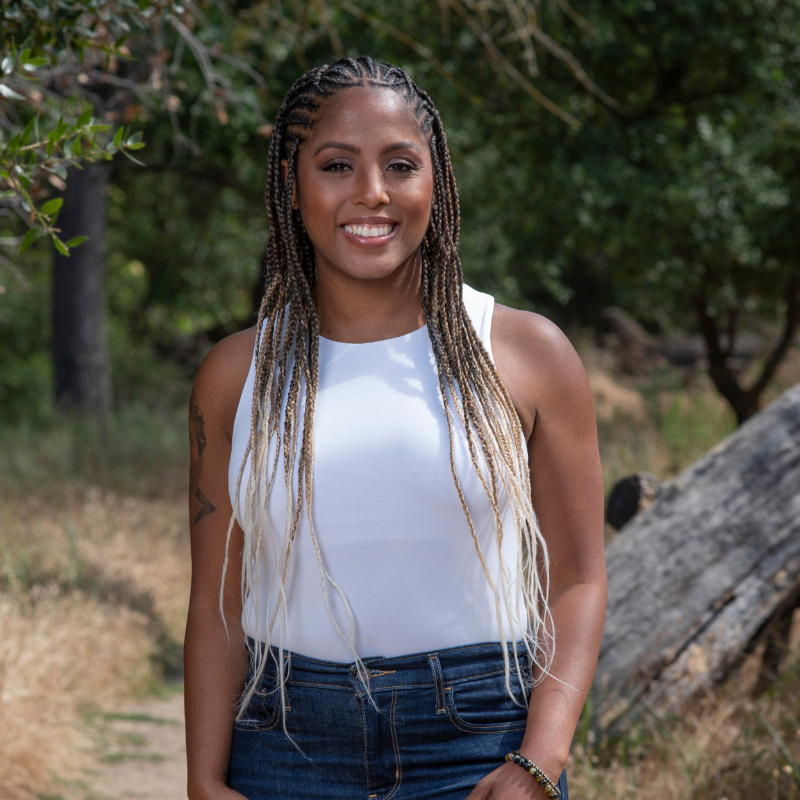
Amber Thuston, LPCC
Psychospiritual Grief Counselor· Evidential Medium· Spiritual Counselor
I am a Licensed Professional Clinical Counselor #13283, Grief Certified, Spiritual Counselor, and Evidential Medium and I hold all three without apology. My practice, Healing with Amber, was built to serve BIPOC women navigating the losses that mainstream clinical frameworks cannot hold: the grief that is racial, ancestral, spiritual, and disenfranchised all at once.
The Psychospiritual Grief Method was not developed in an academic office. It was built from the inside out from years of sitting with BIPOC women whose grief was real, complex, and unseen by the systems that were supposed to help them. Women who needed someone who could hold the clinical and the sacred at the same time.
This training is what I wish had existed when I was in graduate school. I am bringing it to the profession now because BIPOC clients deserve clinicians who are ready to hold the full picture of what they carry.
Program Details
Date
Saturday, October 17, 2026
Save the date. Registration closes once capacity is reached.
Time
9:00 AM – 4:30 PM PST
6.0 instructional hours. Breaks and lunch are not included in CE credit hours per NBCC policy.
Format
Live Online · Zoom
Access link provided upon registration. Requires stable internet, webcam, and audio. Zoom is free at zoom.us.
Target Audience
Licensed & Pre-Licensed Clinicians
LPC · LPCC · LCSW · LMFT · Psychologist · Pre-licensed in supervised practice. No prerequisites.
Certificate
Issued within 10 business days
Requires full attendance verification and an 80% or higher score on the post-training learning assessment. Partial credit is not available.
CE Hours
6.0 CE Credit Hours
NBCC Approved. Content areas: Human Development and Counseling · Social and Cultural Diversity.
Investment
$220
Per participant · Payment processed securely at registration
NBCC Approved CE Provider
NBCC Approved Continuing Education
Healing with Amber is an NBCC-approved continuing education provider. This program has been reviewed and approved for 6.0 CE credit hours in the content areas of Human Development and Counseling and Social and Cultural Diversity. CE credit hours not CEUs are awarded upon verified completion of the full program and passing score on the learning assessment.
Accessibility & Accommodations
Healing with Amber is committed to full ADA compliance. This program includes closed captioning via Zoom and materials in accessible, screen-reader-compatible formats. To request an accommodation, contact us at least 7 days before the program date: amber@healingwithamber.co